The standard size of stairs for residential buildings defines how people move safely and comfortably between levels. When stair dimensions follow accepted standards, daily use feels natural and secure. Poorly sized stairs increase the risk of trips, fatigue, and injuries. This guide focuses on the standard size of stairs for residential homes using practical design logic, safety principles, and code based norms used worldwide. You will learn exact dimensions, variation ranges, design methods, material impacts, and planning tips. The content targets homeowners, builders, architects, and renovators who want clarity without confusion. Each section delivers depth, practical examples, and clear reasoning to help you design or evaluate stairs correctly.
Why Standard Stair Sizes Matter in Residential Buildings?
Stairs connect floors and support constant movement. In homes, people use stairs several times each day. When the standard sizes of stairs for residential use is respected, the body moves naturally. The foot lands securely, the knee angle stays comfortable, and balance remains stable. Consistent dimensions reduce missteps because muscle memory develops quickly. Building codes exist to protect all users including children and older adults. Standardization also supports furniture movement, emergency evacuation, and resale value. Ignoring standards may cause inspection failure or require costly changes. More importantly, unsafe stairs can cause serious falls. Correct sizing is not only about compliance but about long term comfort and health.
Core Concepts of Residential Stair Design
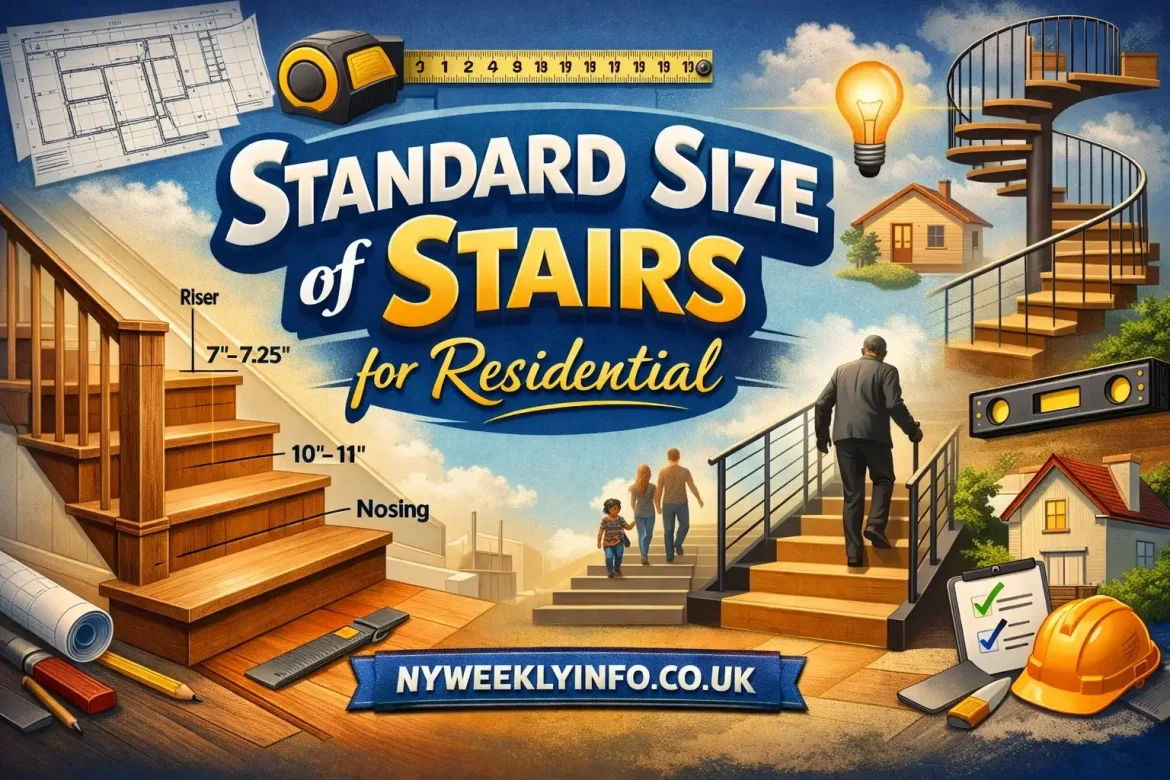
Understanding stair terminology is essential before reviewing dimensions. Each part affects how stairs function as a system. The riser is the vertical height between steps. The tread is the horizontal surface where the foot rests. The nosing is the front edge of the tread. The stringer supports the stairs along the sides. The landing is a flat platform at the top, bottom, or turn. Handrails guide movement and offer support. Headroom ensures clearance above steps. The standard size of stairs for residential buildings balances all these elements together. Changing one part affects the others. Good design keeps proportions consistent from the first step to the last.
Standard Riser Height for Residential Stairs
Riser height plays a major role in comfort and safety. Most residential codes recommend a riser height between 7 inches and 7.75 inches. Many designers aim for 7.25 inches as an ideal middle value. Lower risers reduce strain on the knees and improve safety. Higher risers save space but increase effort and risk. All risers in a stair flight must have equal height. Variations greater than 0.375 inches are usually not allowed. Uniformity prevents tripping because the body expects the same step height each time. The standard stair dimensions use favors moderate risers that suit most people.
Standard Tread Depth for Residential Stairs
Tread depth determines how securely the foot lands. A common residential standard requires a minimum tread depth of 10 inches excluding nosing. Many comfortable designs use 10.5 to 11 inches. Deeper treads feel safer and allow full foot placement. Shallow treads cause the heel to hang off and increase fall risk. Tread depth must remain consistent across the entire staircase. The relationship between riser height and tread depth matters. Designers often follow the comfort rule where riser height plus tread depth equals about 17 to 18 inches. This balance supports natural walking motion.
Nosing Dimensions and Their Role
Nosing improves safety by increasing tread depth without extending the stair footprint. In residential stairs, nosing usually projects between 0.75 inches and 1.25 inches. Rounded or beveled nosing reduces sharp edges. Excessive nosing can cause missteps, while no nosing may reduce foot support. Many codes require uniform nosing across all steps. Nosing visibility also matters. Contrasting colors or textures help users see each step clearly. The residential stair dimensions homes includes nosing that enhances both comfort and visual clarity.
Stair Width Standards for Residential Use
Stair width affects traffic flow and furniture movement. Most residential codes set a minimum clear width of 36 inches above the handrail height. This width allows one person to move comfortably and two people to pass carefully. Wider stairs feel more open and are easier to navigate. Narrow stairs can feel cramped and unsafe. Handrails reduce usable width slightly, so planning should account for that. In luxury homes, widths of 42 to 48 inches are common. The standard size of stairs for residential buildings ensures access without wasting space.
Headroom Requirements for Residential Stairs
Headroom is the vertical clearance above stair treads. Insufficient headroom can cause serious injuries. Most residential standards require a minimum headroom of 80 inches measured vertically from the tread nosing. This clearance applies along the full length of the stair. Sloped ceilings and beams must not intrude into this space. Proper headroom allows tall users to move safely without bending. It also improves the feeling of openness. The standard size of stairs for residential use always includes adequate headroom planning early in design.
Staircase Angle and Slope
The angle of a staircase affects effort and safety. Residential stairs usually fall between 30 and 37 degrees. Steeper stairs save space but increase difficulty. Shallower stairs take more room but feel easier. The angle results from the relationship between riser height and tread depth. Consistent proportions maintain a stable walking rhythm. Extreme slopes may violate building codes or feel unsafe for children and seniors. The standard size of stairs for residential buildings aims for a balanced slope that suits daily use.
Number of Risers and Stair Flights
The total number of risers depends on floor to floor height. Designers divide the total height by the chosen riser height. This calculation determines the number of steps. Residential stair flights usually include between 12 and 16 risers before a landing is required. Long continuous flights can cause fatigue and increase fall risk. Landings provide rest points and improve safety. Codes often limit the maximum vertical rise between landings. The standard size of stairs for residential homes includes thoughtful flight planning to match building height.
Landing Size and Placement
Landings are flat platforms that break up stair runs. They appear at the top, bottom, and any change in direction. Residential codes often require landings to be at least as wide as the stair and at least 36 inches deep. Adequate landing size allows safe transition between levels. Doors should not swing over stairs without a landing. Proper landing placement supports furniture movement and emergency exit. The standard stair dimensions buildings includes landings that feel stable and spacious.
Handrail Height and Grip Standards
Handrails provide essential support and guidance. Residential stair handrails typically sit between 34 and 38 inches above the tread nosing. This height suits most users and supports balance. Handrails must be continuous along the stair flight. The grip size should allow a firm hold. Circular shapes with a diameter of 1.25 to 2 inches are common. Proper handrail placement reduces fall risk significantly. The standard sizes of stairs for residential use integrates handrails as a core safety feature.
Guardrail and Baluster Spacing
Guardrails prevent falls from open sides of stairs and landings. Residential guardrails usually require a minimum height of 36 inches. Baluster spacing must prevent small children from slipping through. Most standards limit openings to no more than 4 inches. This spacing balances safety with visibility. Strong attachment ensures long term stability. The size of stairs for residential buildings includes guardrails that protect without blocking light.
Material Impact on Stair Dimensions
Materials affect stair thickness and finish dimensions. Wood treads may require additional thickness for strength. Concrete stairs often have fixed riser and tread proportions. Stone adds weight and may need deeper treads for comfort. Carpet reduces effective tread depth slightly. Designers must consider finished dimensions, not just structural sizes. The standard size of stair for residential homes refers to finished dimensions after all coverings are installed. Planning for materials early avoids costly adjustments later.
Wooden Residential Stairs Standard Sizes
Wooden stairs are common in homes. Typical wooden residential stairs follow standard riser and tread dimensions closely. Stringers support the structure and determine step spacing. Wood allows flexibility in nosing profiles and finishes. Proper thickness ensures durability and reduces squeaks. The standard size of stairs for residential wooden designs emphasizes consistency and strength. Good craftsmanship ensures long term comfort.
Concrete Residential Stairs Standard Sizes
Concrete stairs offer durability and fire resistance. Residential concrete stairs usually follow the same riser and tread standards as wood. Precision during forming is critical because changes later are difficult. Surface finishes must maintain slip resistance. The standard size of stairs for residential concrete designs focuses on accuracy during construction. Proper reinforcement supports safety and longevity.
Metal Stair Considerations in Homes
Metal stairs appear in modern or compact homes. They can follow residential standards but require careful tread design. Open risers may be restricted by code. Slip resistance is essential. Metal allows slim profiles but must still meet minimum dimensions. The size of stairs for residential metal stairs balances aesthetics with compliance.
Spiral Staircases and Size Variations
Spiral stairs save space but differ from straight stairs. Residential codes often allow spiral stairs with minimum tread depth at the walking line. Riser height limits still apply. Clear width usually measures at least 26 inches. Handrails are mandatory. Spiral stairs may not suit primary access due to difficulty. The standard size of stairs for residential spiral designs reflects space efficiency with safety limits.
Alternating Tread Stairs and Loft Access
Alternating tread stairs appear in lofts and small homes. They reduce footprint but require careful use. Codes may allow them only for limited access. Tread depth alternates to support each foot. Riser height is steeper. These stairs demand caution. The standard size for residential loft access may differ based on local rules.
Accessibility and Aging in Place
As homeowners age, stair comfort becomes critical. Lower risers and deeper treads improve accessibility. Continuous handrails and strong lighting support safety. Some homes include wider stairs to allow assistance. Planning for future needs adds long term value. The standard size of stairs for residential use can adapt within allowable ranges to support aging in place.
Lighting and Visibility Standards
Lighting affects stair safety as much as size. Uniform illumination prevents shadows that hide step edges. Many codes require lighting at each landing and along stair runs. Switch placement ensures control from both ends. Contrasting tread edges improve visibility. The standard size for residential buildings works best with proper lighting design.
Relationship Between Stair Size and Floor Plan
Stair dimensions influence overall layout. Larger stairs require more floor area. Compact stairs save space but reduce comfort. Designers must balance circulation, room sizes, and stair placement. Straight stairs need longer runs. L shaped and U shaped stairs reduce length but need landings. The standard size of stairs for residential homes shapes interior planning decisions.
Building Code Variations by Region
While many standards are similar worldwide, local codes may vary. Some regions allow slightly higher risers or narrower widths. Always verify local requirements before construction. Codes reflect climate, culture, and safety history. The standard size of stairs for residential buildings often aligns with international norms but local approval matters.
Measuring Existing Residential Stairs
When renovating, measuring existing stairs helps identify issues. Measure riser height from tread to tread. Measure tread depth from nosing to nosing. Check width and headroom. Look for inconsistencies. Small differences can cause trips. Understanding current conditions helps plan upgrades. The standard size of stairs for residential use provides a benchmark for evaluation.
Common Stair Design Mistakes
Many stair problems come from ignoring standards. Inconsistent risers are a common error. Shallow treads cause discomfort. Insufficient headroom creates hazards. Poor handrail placement reduces support. Ignoring finished material thickness alters dimensions. Avoiding these mistakes protects users. The standard size for residential buildings exists to prevent such issues.
Renovation and Stair Resizing Challenges
Resizing stairs during renovation can be complex. Structural limits may restrict changes. Floor heights may not divide evenly by standard risers. Designers may adjust within allowed ranges. Sometimes adding a landing solves issues. Understanding standards helps find solutions. The standard size of stairs for residential homes guides practical renovation choices.
Energy and Thermal Considerations
Stairwells affect airflow in homes. Open stairs allow heat movement between floors. Enclosed stairs can reduce drafts. Stair placement influences energy efficiency. While size standards focus on safety, layout affects comfort. The standard sizes of stairs for residential buildings fits within broader design goals.
Cost Implications of Stair Dimensions
Stair size affects material and labor costs. Larger stairs use more space and materials. Complex layouts increase construction time. However, undersized stairs may reduce home value. Investing in proper dimensions pays off long term. The standard size of stairs for residential use balances cost with safety.
Safety Testing and Real World Use
Stairs should be tested through real movement. Walking up and down reveals comfort issues. Children and older adults provide useful feedback. Designers often mock up steps to confirm proportions. The standard size of stairs for residential buildings reflects decades of real world use and study.
Sustainable Design and Stair Planning
Sustainable homes consider material efficiency and longevity. Proper stair dimensions reduce future changes. Durable materials extend lifespan. Good lighting reduces accidents. The standard size of stairs use supports sustainable living by reducing waste and injury.
Cultural Preferences in Stair Design
Different cultures prefer different stair proportions. Some regions favor lower risers and deeper treads. Others accept steeper stairs due to space limits. Residential standards aim for broad comfort. Understanding cultural context helps design better homes. The standard size of stairs for residential buildings balances global preferences.
Future Trends in Residential Stair Design
Modern homes explore floating stairs and open risers. Codes adapt to new styles. Safety remains a priority. Designers integrate technology such as step lighting. Despite trends, core dimensions remain stable. The standard size of stairs use continues to guide innovation.
Practical Design Formula for Residential Stairs
Designers often use a simple formula. Multiply riser height by number of risers to match floor height. Choose tread depth that balances comfort. Check slope and headroom. Adjust within allowed ranges. This method ensures compliance and comfort. The standard size of stairs for residential homes becomes easier to apply with practice.
Final Thoughts on Residential Stair Standards
Stairs are more than connectors between floors. They shape daily movement and safety. Respecting the standard size of stairs for residential buildings ensures comfort, compliance, and value. Thoughtful design considers users of all ages. Whether building new or renovating, understanding these standards leads to better outcomes. Safe stairs support healthy living and confident movement every day. With NYWEEKLYINFO, you can keep up with emerging tech trends without feeling overwhelmed by jargon.
Frequently Asked Questions – FAQs
What is the ideal riser height for residential stairs?
Most homes use risers between 7 and 7.75 inches with 7.25 inches as a comfortable choice.
What is the minimum tread depth for residential stairs?
The minimum tread depth is usually 10 inches excluding nosing.
How wide should residential stairs be?
Residential stairs typically require at least 36 inches of clear width.
Are spiral stairs allowed in homes?
Spiral stairs are allowed in many homes but must meet specific size and safety rules.
Why must stair dimensions be consistent?
Consistency prevents trips because the body expects the same step size each time.