
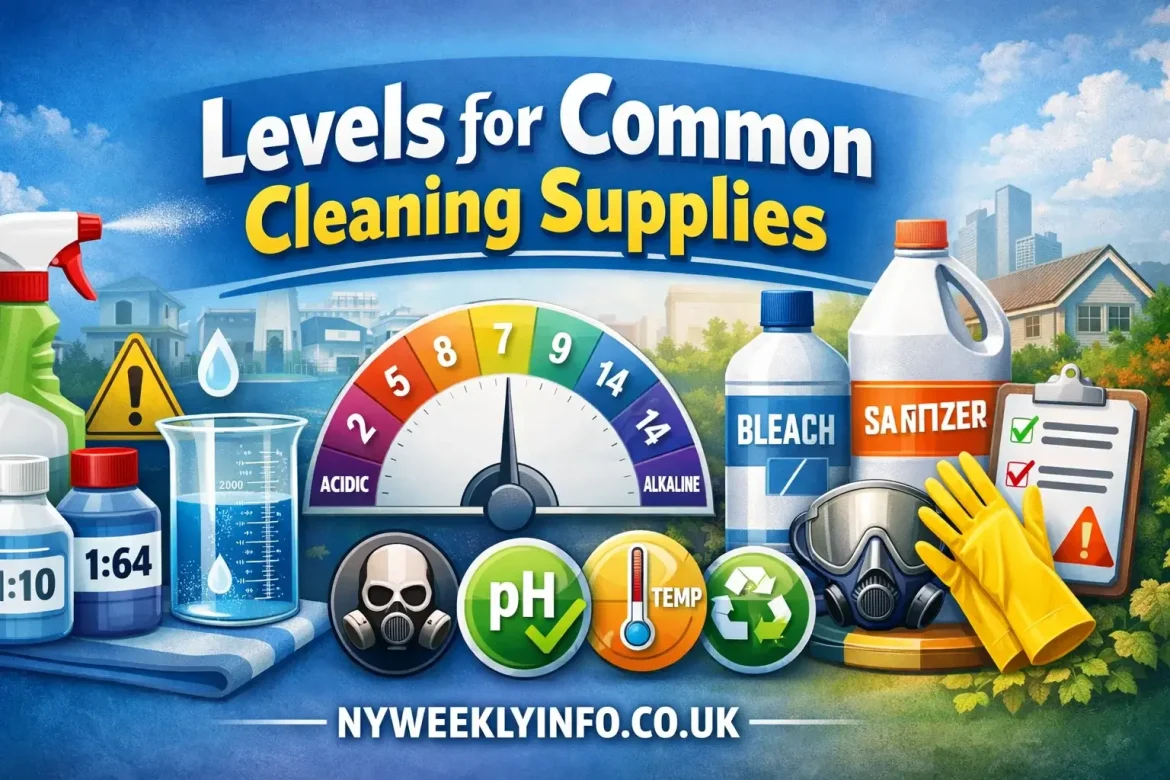
Cleaning supplies are part of daily life in homes, offices, schools, hospitals, and industrial spaces. While most people use them routinely, very few understand the importance of using correct levels. Levels refer to concentration, dilution ratios, pH range, exposure limits, storage quantities, and usage frequency. Using too little reduces effectiveness, while using too much increases health, safety, and environmental risks. This article focuses on levels for common cleaning supplies, covering chemical strength, safe handling thresholds, surface compatibility, and regulatory considerations.
Understanding proper levels is essential for hygiene, indoor air quality, and long term surface care. It also helps prevent respiratory irritation, skin burns, accidental poisonings, and chemical reactions. This guide is written to help you make informed decisions when selecting, diluting, and applying cleaning products in both residential and professional settings.
Understanding What “Levels” Mean in Cleaning Supplies
Levels for common cleaning supplies do not refer to a single measurement. Instead, they describe several related factors that determine how a product performs and how safe it is to use.
Concentration Levels
Concentration refers to how strong the active ingredient is in a product. Some cleaners are sold ready to use, while others are concentrates that must be diluted. High concentration does not always mean better cleaning. Excessively strong solutions can damage surfaces and pose health risks.
Dilution Levels
Dilution levels indicate how much water should be added to a concentrated product. Manufacturers usually provide ratios such as 1:10 or 1:64. These ratios are designed to balance effectiveness and safety.
pH Levels
pH levels measure acidity or alkalinity on a scale from 0 to 14. Acidic cleaners dissolve mineral deposits and rust. Alkaline cleaners remove grease and organic matter. Neutral cleaners are mild and safe for frequent use.
Exposure and Safety Levels
Exposure levels relate to how much of a chemical a person can safely inhale, touch, or ingest without harm. These limits are especially important in enclosed spaces.
Usage and Storage Levels
Usage levels include how often a product should be used and how much should be applied per cleaning task. Storage levels for common cleaning supplies involve how much product should be kept on site to reduce spill and exposure risks.
Levels for All Purpose Cleaners
Levels for common cleaning supplies are among the most commonly used products in households and workplaces. They are designed to clean multiple surfaces with minimal effort.
Concentration Levels
Most all purpose cleaners contain surfactants, solvents, and small amounts of fragrance or disinfectant. Ready to use versions typically have low concentration levels suitable for daily cleaning. Concentrated versions may be two to ten times stronger and require proper dilution.
Dilution Guidelines
Typical dilution levels range from 1:10 for heavy soil to 1:64 for light cleaning. Using a stronger mix than recommended does not significantly improve cleaning performance but increases residue and irritation risk.
pH Range
All purpose cleaners are usually neutral to mildly alkaline, with a pH between 6 and 9. This range makes them safe for countertops, sealed wood, tile, and synthetic surfaces.
Safety Levels
When used as directed, all purpose cleaners pose low risk. However, overuse can cause skin dryness and eye irritation. Ventilation is important to keep airborne chemical levels low.
Levels for Disinfectants and Sanitizers
Disinfectants and sanitizers are designed to kill bacteria, viruses, and fungi. Levels for common cleaning supplies are critical for both effectiveness and safety.
Active Ingredient Levels
Common active ingredients include bleach, quaternary ammonium compounds, hydrogen peroxide, and alcohol. Each requires a specific concentration to be effective. Too low a level reduces germ kill, while too high increases toxicity. Levels for common cleaning supplies vary between household and commercial products.
Dilution and Contact Time
Disinfectants often require precise dilution, such as 1:32 or 1:128. They also need sufficient contact time, often between 30 seconds and 10 minutes. Using a stronger solution does not shorten required contact time.
pH Considerations
Many disinfectants are alkaline, especially those based on bleach. Others, like hydrogen peroxide, are mildly acidic. The pH affects surface compatibility and stability. The pH of bleach is high, while bleach pH varies by type; many wonder if Dawn dish soap pH is neutral and what pH is bleach compared to Dawn dish soap pH.
Exposure Limits
Disinfectants can release fumes that irritate the lungs and eyes. Safe exposure levels depend on room size and ventilation. Prolonged exposure to high levels increases respiratory risk.
Levels for Glass and Window Cleaners
Glass cleaners are formulated to clean without leaving streaks or residue. Levels for common cleaning supplies usually contain alcohol, ammonia, or mild surfactants.
Concentration Levels
Glass cleaners are typically low concentration products. Alcohol content is often below 10 percent, enough to dissolve grease and evaporate quickly.
Dilution Practices
Most glass cleaners are ready to use. Concentrated versions should be diluted according to instructions, usually at ratios of 1:4 to 1:8.
pH Levels
Glass cleaners are generally neutral to mildly alkaline, with a pH between 7 and 9. This prevents damage to glass coatings and window frames.
Safety Thresholds
In normal use, glass cleaners are low risk. Over spraying in enclosed spaces can raise inhalation levels, leading to headaches or dizziness.
Levels for Bathroom Cleaners
Bathroom cleaners target soap scum, mineral deposits, and microbial growth. These products often contain stronger acids or disinfectants. Knowing levels for common cleaning supplies allows for more efficient cleaning.
Acid Strength Levels
Many bathroom cleaners are acidic, with pH levels between 1 and 4. This acidity dissolves limescale and rust effectively.
Dilution Requirements
Some bathroom cleaners are ready to use, while others are concentrates that require dilution. Using undiluted acid cleaners on delicate surfaces can cause etching and discoloration.
Surface Compatibility Levels
High acid levels are safe for ceramic and porcelain but harmful to natural stone, metal fixtures, and grout if overused.
Exposure Considerations
Acid fumes can irritate the respiratory system. Safe levels depend on ventilation and duration of use. Gloves are recommended to prevent skin burns.
Levels for Kitchen Degreasers
Degreasers are formulated to break down oils and fats found in kitchens and food preparation areas. Levels for common cleaning supplies are usually indicated on product labels.
Alkalinity Levels
Most degreasers are alkaline, with pH levels between 9 and 13. Higher alkalinity increases grease removal but also raises corrosion risk.
Dilution Ratios
Light degreasing may require dilution levels of 1:20 or higher. Heavy grease removal may need stronger mixes such as 1:5. Using the strongest level for routine cleaning is unnecessary.
Temperature and Performance
Degreasers work best at warm temperatures. Higher heat increases effectiveness without increasing chemical levels.
Safety Limits
Strong alkaline solutions can cause skin and eye burns. Proper gloves and eye protection help keep exposure within safe limits.
Levels for Floor Cleaners
Floor cleaners are designed for specific materials such as tile, vinyl, laminate, or wood. Using incorrect levels can damage flooring. Proper understanding of levels for common cleaning supplies protects children and pets.
Concentration Control
Floor cleaners are often concentrates. Using too much product leaves residue that attracts dirt and causes slipping hazards.
Dilution Standards
Common dilution levels range from 1:64 to 1:128. These ratios provide sufficient cleaning without leaving a film.
pH Suitability
Neutral cleaners are preferred for most floors. Alkaline cleaners may be used for heavy soil on durable surfaces, while acidic cleaners are limited to mineral buildup.
Usage Frequency Levels
Daily cleaning requires mild levels. Deep cleaning should be done less frequently using higher concentration under controlled conditions. Levels for common cleaning supplies affect their cleaning power and safety.
Levels for Bleach Based Cleaners
Bleach based cleaners are widely used for disinfection and stain removal, but their levels must be carefully controlled to balance effectiveness and safety. Because bleach is chemically reactive, using higher than necessary levels increases the risk of surface damage, harmful fumes, and accidental exposure. Proper level management ensures reliable germ control while minimizing health and material risks.
Chlorine Concentration
Household bleach typically contains about 5 to 6 percent sodium hypochlorite, which is far stronger than what is needed for everyday cleaning. Most cleaning and disinfecting tasks require this concentration to be reduced significantly through dilution. Lower chlorine levels are sufficient to kill germs while reducing corrosiveness and odor. Using undiluted bleach unnecessarily increases hazard without improving results. Always check levels for common cleaning supplies before mixing products.
Recommended Dilution Levels
For general surface disinfection, a dilution ratio of approximately 1:50 is commonly recommended. For food contact surfaces, even lower concentrations are required to prevent chemical residue while still providing sanitizing action. Following recommended dilution levels ensures both safety and regulatory compliance. Accurate dilution also helps prevent surface discoloration and chemical burns.
pH and Stability
Bleach solutions are highly alkaline, with pH levels typically ranging from 11 to 13. This high pH contributes to bleach’s disinfecting ability but also makes it harsh on many materials. Elevated alkalinity can weaken fabrics, damage finishes, and corrode metals over time. Maintaining proper dilution levels helps stabilize pH and reduce long term damage. Levels for common cleaning supplies help prevent overuse and chemical waste.
Health and Safety Levels
Bleach fumes can irritate the lungs, eyes, and skin, especially in enclosed or poorly ventilated spaces. Mixing bleach with acids or ammonia produces toxic gases that pose serious health risks. Keeping bleach levels within recommended ranges and ensuring adequate ventilation are essential safety measures. Gloves and careful handling further reduce exposure risks.
Levels for Ammonia Based Cleaners
Ammonia based cleaners are effective for cutting grease and leaving streak free finishes on glass and floors. However, ammonia has a strong odor and can quickly become irritating if levels are too high. Proper control of ammonia levels ensures effective cleaning while minimizing respiratory and eye discomfort.
Concentration Ranges
Household ammonia solutions are typically diluted to relatively low concentrations suitable for routine cleaning. Industrial strength ammonia products are far more concentrated and require specialized handling procedures. Using household ammonia at controlled levels provides sufficient cleaning power without excessive fumes. Stronger concentrations should only be used in professional settings with proper safeguards.
Dilution Practices
Typical ammonia dilution levels range from 1:10 to 1:20, depending on the cleaning task. Increasing concentration beyond this range does not significantly improve cleaning results but greatly intensifies odor and irritation. Proper dilution ensures efficient grease removal while maintaining safer air quality. Measuring accurately helps avoid unnecessary overuse.
pH Characteristics
Ammonia solutions are alkaline, with pH levels generally between 11 and 12. This alkalinity makes ammonia effective at breaking down grease and grime. However, high pH levels can damage certain surfaces, including some metals and finishes. Controlling ammonia levels helps protect surfaces while maintaining cleaning performance.
Exposure Thresholds
Ammonia vapors can cause eye, throat, and respiratory irritation even at relatively low levels. Safe exposure depends on room size, airflow, and duration of use. Adequate ventilation helps keep airborne ammonia within tolerable limits. Prolonged exposure to elevated levels should always be avoided.
Levels for Acidic Cleaners
Acidic cleaners are designed to remove mineral deposits, rust, and scale, making them among the most aggressive cleaning products. Because of their corrosive nature, careful control of acid levels is essential to prevent damage and injury. Proper use ensures effective cleaning without unnecessary risk.
Acid Strength Categories
Acidic cleaners vary widely in strength, with mild acids typically having pH levels between 3 and 5. Strong acids may have pH levels below 2, making them significantly more hazardous. As pH decreases, the risk of burns and surface damage increases. Selecting the appropriate acid strength is critical for safe use.
Dilution Importance
Strong acidic cleaners should always be diluted according to manufacturer instructions. Over concentrated acid solutions increase the likelihood of corrosion, etching, and chemical burns. Proper dilution reduces aggressiveness while maintaining cleaning effectiveness. Controlled acid levels also improve user safety during application. Awareness of levels for common cleaning supplies improves efficiency and safety in cleaning routines.
Surface Safety Levels
Acidic cleaners are generally safe for ceramic, porcelain, and stainless steel when used correctly. However, they can severely damage natural stone surfaces such as marble and limestone, as well as certain metals. Using the correct level prevents irreversible surface damage. Testing on small areas is a recommended precaution.
Personal Protection Levels
Using acidic cleaners safely requires appropriate personal protection. Gloves, eye protection, and adequate ventilation help keep exposure within safe limits. Even mild acids can irritate skin and eyes with prolonged contact. Protective measures are essential when working with any acidic product. Understanding the levels for common cleaning supplies helps ensure safe use at home.
Levels for Laundry Detergents
Laundry detergents are formulated to remove oils, stains, and odors from fabrics, but correct levels are essential for fabric care and skin safety. Overuse does not improve cleaning and often leads to buildup and irritation. Proper level control ensures clean clothes without unnecessary residue. Comparing levels for common cleaning supplies ensures you choose the right product for the task.
Dosage Levels
Manufacturers provide dosage instructions based on load size, water hardness, and soil level. Using more detergent than recommended does not enhance cleaning and often leaves residue in fabrics. Excess detergent can also accumulate in washing machines, reducing efficiency. Accurate dosing protects both clothing and appliances.
Concentration Variations
Concentrated detergents require significantly smaller amounts than traditional formulas. Misjudging concentration levels leads to overuse and buildup in fabrics. Residue trapped in fibers can make clothes stiff and uncomfortable. Understanding concentration differences is key to proper detergent use. Levels for common cleaning supplies range from mild to industrial strength.
pH Range
Most laundry detergents are mildly alkaline, which helps remove organic stains such as sweat and food residues. This pH range is effective for cleaning while remaining gentle on most fabrics. Excessively high alkalinity can weaken fibers over time. Balanced pH levels support both cleanliness and fabric longevity.
Skin Contact Levels
Detergent residue left in clothing can irritate sensitive skin, especially for children and individuals with allergies. Proper rinsing helps reduce skin contact with residual chemicals. Using the correct detergent level minimizes this risk. Maintaining low residue levels supports overall skin comfort.
Levels for Dishwashing Products
Dishwashing products include both hand dish soaps and automatic dishwasher detergents, each requiring different level controls. Using appropriate amounts ensures effective cleaning while preventing residue and damage. Correct levels also reduce the risk of ingesting chemical residues. Always read labels to know the levels for common cleaning supplies before use.
Hand Dish Soap Levels
Hand dish soaps are formulated for direct skin contact and typically have low irritation potential. Only small amounts are needed to break down grease and food residue. Overuse leads to excessive suds and wasted product without better cleaning. Controlled levels keep dishwashing efficient and gentle on skin.
Dishwasher Detergent Levels
Automatic dishwasher detergents are more alkaline and must be used in precise amounts. Overfilling detergent compartments causes spotting, film buildup, and potential damage to dishwasher components. Correct levels ensure effective cleaning and proper rinsing. Precision dosing also extends appliance lifespan.
Water Hardness Adjustments
Hard water can reduce detergent effectiveness by binding cleaning agents. Slightly higher detergent levels for common cleaning supplies may be needed in hard water areas. However, excessive increases are unnecessary and counterproductive. Adjusting levels carefully maintains balance without causing residue problems.
Safety and Residue Levels
Proper dosing prevents chemical residue from remaining on dishes after washing. Residue increases the risk of ingestion and affects taste and appearance. Maintaining correct levels ensures dishes are safe for everyday use. Effective rinsing further reduces exposure risks. Levels for common cleaning supplies guide users on what to use for light or heavy cleaning.
Levels for Specialty Cleaners
Specialty cleaners are designed for specific tasks such as cleaning ovens, drains, or stainless steel surfaces. These products often contain strong chemicals and require strict level control. Using them only as directed minimizes risk and maximizes effectiveness. Levels for common cleaning supplies determine how effective they are on different surfaces.
Oven Cleaner Strength
Oven cleaners are highly alkaline and formulated to dissolve baked on grease and carbon deposits. Using high levels increases the risk of skin burns and surface damage. Applying only the necessary amount reduces fumes and chemical exposure. Controlled strength ensures safer and effective cleaning.
Drain Cleaner Levels
Chemical drain cleaners contain powerful acids or bases designed to clear clogs. Using more than the recommended amount does not improve performance and significantly increases hazard. Excess chemicals can damage plumbing and create dangerous splashes. Following level instructions is critical for safety.
Stainless Steel Cleaner Levels
Stainless steel cleaners often contain oils, solvents, or mild abrasives to clean and protect surfaces. Light application is usually sufficient to remove fingerprints and smudges. Overuse leaves residue and attracts dirt. Maintaining minimal levels for common cleaning supplies keeps surfaces clean and polished.
Controlled Use Importance
Levels for common cleaning supplies should be used only when necessary and at recommended levels. Frequent or excessive use increases health and environmental risks. Controlled use ensures these powerful products remain effective and safe. Responsible level management is essential for long term safety.
Storage Levels for Cleaning Supplies
Proper storage levels for cleaning supplies play a critical role in reducing accidents and preserving product effectiveness over time. When cleaning products are stored correctly, the risk of spills, leaks, chemical reactions, and accidental exposure is significantly reduced. Storage also affects chemical stability, as improper conditions can weaken active ingredients and reduce cleaning performance. Maintaining appropriate storage levels ensures that products remain safe, effective, and ready for use when needed.
Quantity Limits
Keeping only the necessary quantity of cleaning supplies on site helps minimize safety risks and simplifies inventory control. Excessive stock increases the likelihood of spills, leaks, and accidental misuse, especially in small or poorly ventilated spaces. Large quantities should be limited to professional environments with secure storage rooms, secondary containment, and proper labeling. Controlled quantity levels also make it easier to rotate stock and prevent expired products from being used.
Temperature and Light Levels
Temperature and light exposure directly affect the chemical stability of many cleaning products. Extreme heat can cause pressure buildup, evaporation, or chemical breakdown, while freezing temperatures may alter product composition. Direct sunlight can degrade active ingredients, especially in bleach and peroxide based cleaners. Storing supplies in cool, dry, and shaded areas helps maintain consistent performance and extends shelf life.
Container Integrity
Original containers are specifically designed to safely hold chemical formulations without degrading or leaking. These containers are tested for compatibility with the product’s acidity, alkalinity, and volatility. Transferring cleaning supplies into unapproved containers increases the risk of leaks, chemical reactions, and misidentification. Maintaining container integrity also ensures that safety labels and usage instructions remain accessible.
Child and Pet Safety
Levels for common cleaning supplies must account for child and pet safety to prevent accidental poisoning or chemical burns. Cleaning supplies should always be stored in locked cabinets or high shelves that are completely inaccessible to children and animals. Even small amounts of concentrated cleaners can cause serious harm if ingested or spilled. Proper storage practices help keep accidental exposure levels as close to zero as possible.
Environmental Levels and Impact
Cleaning supply levels do not only affect indoor environments but also have a broader environmental impact. The amount of product used and disposed of influences water systems, air quality, and long term ecological balance. Responsible use and disposal reduce chemical load on natural systems. Managing environmental levels is an important part of sustainable cleaning practices. Proper handling based on levels for common cleaning supplies prevents accidents and damage.
Wastewater Concentrations
When cleaning products are used in excessive amounts, surplus chemicals enter wastewater systems through drains. High concentrations can disrupt water treatment processes and harm aquatic organisms once released into rivers or oceans. Proper dilution and measured use significantly lower chemical concentrations in wastewater. Maintaining controlled levels helps protect ecosystems and supports effective wastewater treatment.
Air Quality Levels
Many cleaning products release volatile compounds that affect indoor air quality. Overuse increases airborne chemical concentration, which can cause headaches, respiratory irritation, and long term sensitivity. Using only the minimal effective level keeps indoor air safer and more comfortable. Proper ventilation further helps maintain healthy air quality during and after cleaning.
Sustainable Usage Levels
Sustainable usage of levels for common cleaning supplies focus on using exactly what is needed for effective cleaning without waste. Overuse leads to unnecessary resource consumption, higher packaging waste, and increased environmental pollution. Measuring correct amounts reduces the demand for raw materials and energy used in manufacturing. Sustainable levels benefit both household budgets and the environment.
Long Term Impact Reduction
Consistently maintaining correct cleaning supply levels reduces cumulative environmental harm over time. Small reductions in daily chemical use add up to significant decreases in pollution and waste. Long term attention to levels supports healthier ecosystems and more responsible consumption habits. This approach aligns cleanliness with environmental responsibility. Levels for common cleaning supplies indicate the appropriate dosage for safe cleaning.
Best Practices for Managing Cleaning Supply Levels
Managing Levels for common cleaning supplies requires awareness, routine checks, and consistent habits. Effective level management ensures safety, efficiency, and long term cost savings. Establishing clear practices helps prevent overuse and misuse. These best practices apply to both residential and professional cleaning environments.
Reading Labels Carefully
Product labels provide essential information about proper dilution, usage limits, and safety precautions. Manufacturers test their products to determine the most effective and safest levels for use. Ignoring label instructions often leads to overuse and increased risk. Careful label reading ensures balanced cleaning performance and user safety.
Measuring Accurately
Accurate measurement is one of the most effective ways to control cleaning supply levels. Using measuring cups, pumps, or dispensing systems prevents excessive use and ensures consistent results. Guessing quantities often leads to stronger solutions than necessary. Precise measurement protects surfaces, users, and the environment. Knowing the levels for common cleaning supplies helps protect surfaces and fabrics.
Training and Awareness
In workplaces, training is essential to ensure that all staff understand correct usage levels. Consistent training reduces variation in cleaning practices and minimizes chemical exposure. Awareness programs help reinforce why proper levels matter for safety and efficiency. Well trained users are less likely to misuse cleaning products.
Periodic Review
Cleaning needs change over time based on space usage, occupancy, and surface condition. Periodically reviewing cleaning practices helps identify opportunities to reduce or adjust product levels. Regular evaluation prevents outdated habits from continuing unchecked. This ongoing review supports safe, efficient, and responsible cleaning routines.
Conclusion
Levels for common cleaning supplies influence cleaning effectiveness, surface longevity, personal health, and environmental impact. Understanding concentration, dilution, pH, exposure, and storage levels helps you clean safely and efficiently. More product does not mean better results. The right level delivers the best balance between cleanliness and safety. By following recommended guidelines and using products thoughtfully, you can maintain hygienic spaces without unnecessary risk. Dive into high-quality content designed to keep you ahead at NYWEEKLYINFO.
Frequently Asked Questions – FAQs
1. Why is using higher levels of cleaner not always better?
Higher levels often increase health and surface damage risks without improving cleaning performance.
2. How do I know the correct dilution level for a cleaner?
Always follow the manufacturer’s label instructions and adjust only within recommended ranges.
3. Are natural cleaners safer at higher levels?
Natural products can still cause irritation or damage if overused. Levels matter for all cleaners.
4. What pH level is safest for everyday cleaning?
Neutral pH cleaners are safest for frequent use on most surfaces.
5. Can incorrect levels affect indoor air quality?
Yes. Overuse increases fumes and airborne chemicals, reducing indoor air quality.


