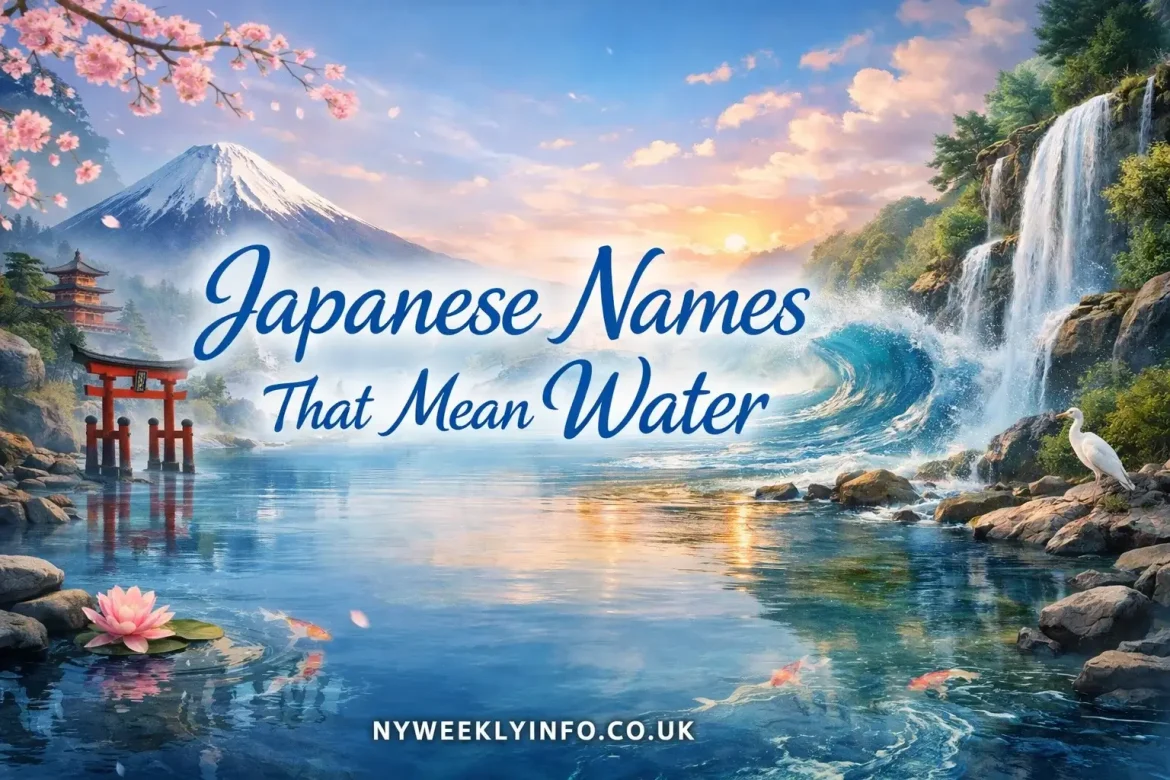
If you are searching for Japanese names that mean water, you are likely looking for a name that carries beauty, symbolism, and cultural depth. Water is one of the most powerful elements in nature. It represents purity, renewal, adaptability, and quiet strength. Choosing a water inspired name for your baby boy or girl can reflect these timeless qualities in a meaningful and elegant way.
In Japanese culture, water holds deep spiritual significance. In traditions connected to Shinto, water is associated with cleansing and renewal. Flowing rivers, gentle rain, and vast oceans often appear in Japanese poetry and art, symbolizing both calmness and resilience. This cultural richness makes Japanese water names especially captivating for modern parents around the world.
Japanese names that mean water often draw inspiration from nature. Some names are connected to the ocean, others to rivers, rain, waves, lakes, or mist. Because water is constantly moving and reshaping the world around it, these names can suggest flexibility, perseverance, and inner balance. For families who feel connected to the sea or inspired by the rhythm of rainfall, a water themed Japanese name can feel both personal and poetic.
Another reason Japanese water names stand out is their layered meanings. A single name may combine characters that represent clarity, depth, or flowing beauty. This gives each name a sense of intention and artistry. Whether you are inspired by serene coastal landscapes or the powerful imagery often seen near iconic places like Mount Fuji, water symbolism remains a central part of Japanese identity.
If you want a name that feels rare yet meaningful, traditional yet modern, exploring Japanese names that mean water is a wonderful place to begin. In the sections below, you will discover thoughtfully selected options for boys and girls, each carrying the spirit of water in its own unique way. Dive in and find a name that flows naturally into your child’s story.
Girl Names Meaning Water in Japanese
Girl names meaning water in Japanese are admired for their elegance, symbolism, and deep cultural roots. In Japan, water represents purity, renewal, adaptability, and inner strength. Flowing rivers, gentle rain, and the vast ocean are recurring themes in Japanese art and spiritual tradition, especially within Shinto, where water is closely connected to cleansing rituals and fresh beginnings. Because of this rich symbolism, many parents are drawn to Japanese girl names inspired by water for their graceful sound and meaningful depth.
These names often reflect elements such as the sea, waves, rain, springs, and mist. Some carry direct meanings like ocean or wave, while others symbolize clarity, freshness, or serene beauty associated with water landscapes across Japan. Whether inspired by the calm shoreline, the rhythm of rainfall, or the strength of ocean tides, Japanese water themed names for girls feel timeless yet distinctive. Below is a curated collection of beautiful options, complete with pronunciation, meaning, and original Japanese writing.
| Name | Japanese | Pronunciation | Meaning |
| Aoi | 葵 | Ah oh ee | Hollyhock, often associated with blue water tones |
| Ami | 海美 | Ah mee | Ocean beauty |
| Asumi | 明澄 | Ah soo mee | Bright and clear water |
| Chika | 千夏 | Chee kah | Thousand summers, linked to flowing seasons |
| Harumi | 春海 | Hah roo mee | Spring sea |
| Hina | 陽菜 | Hee nah | Sun and greens, often linked with fresh rain |
| Honami | 穂波 | Hoh nah mee | Wave of grain |
| Izumi | 泉 | Ee zoo mee | Spring or fountain |
| Kairi | 海里 | Kai ree | Ocean village |
| Kanna | 栞奈 | Kahn nah | Guide and calm, linked to still waters |
| Karin | 花凛 | Kah reen | Elegant flower, associated with rain freshness |
| Miku | 美空 | Mee koo | Beautiful sky, connected to rainfall |
| Minami | 南 | Mee nah mee | South, often tied to warm seas |
| Mio | 澪 | Mee oh | Waterway or channel |
| Misaki | 美咲 | Mee sah kee | Beautiful blossom by the sea |
| Mizuki | 瑞希 | Mee zoo kee | Fresh hope, associated with water blessings |
| Mizuki | 水希 | Mee zoo kee | Water and hope |
| Nami | 波 | Nah mee | Wave |
| Nanami | 七海 | Nah nah mee | Seven seas |
| Nozomi | 望海 | Noh zoh mee | Hope of the sea |
| Reina | 麗奈 | Ray nah | Lovely and graceful, linked to rain beauty |
| Rina | 里奈 | Ree nah | Village and calm |
| Riko | 莉子 | Ree koh | Jasmine child, tied to fresh rain imagery |
| Shiori | 汐里 | Shee oh ree | Tidal village |
| Suika | 水花 | Soo ee kah | Water flower |
| Sumire | 澄玲 | Soo mee reh | Clear and beautiful |
| Umi | 海 | Oo mee | Sea |
| Wakana | 若菜 | Wah kah nah | Young greens nourished by rain |
| Yumi | 由美 | Yoo mee | Gentle beauty |
| Yuna | 優奈 | Yoo nah | Gentle and calm, like quiet waters |
Japanese Names That Mean Water For Boys
Japanese names that mean water carry a strong sense of depth, movement, and resilience, making them especially meaningful choices for boys. In Japanese culture, water symbolizes adaptability, clarity, endurance, and quiet power. From steady rivers carving through stone to powerful ocean tides shaping the coastline, water reflects both calmness and strength. These qualities are deeply respected in Japan and are often reflected in masculine names inspired by the sea, waves, rain, springs, and flowing streams.
Within traditions such as Shinto, water also represents purification and renewal, adding spiritual significance to many water themed names. Parents who choose Japanese names that mean water for boys often appreciate their balance of softness and strength, along with their cultural richness and timeless appeal.
Below is a carefully selected collection of Japanese boy names connected to water, complete with pronunciation, meaning, and original Japanese writing.
| Name | Japanese | Pronunciation | Meaning |
| Aoi | 蒼海 | Ah oh ee | Blue ocean |
| Arata | 新海 | Ah rah tah | New sea |
| Daiki | 大輝 | Dah ee kee | Great radiance, linked to vast ocean imagery |
| Haru | 晴海 | Hah roo | Clear sea |
| Hayate | 颯汰 | Hah yah teh | Swift wind over water |
| Isamu | 勇海 | Ee sah moo | Courageous sea |
| Issei | 一瀬 | Ee seh | One river |
| Junpei | 淳平 | Joon pay | Pure and peaceful, like calm water |
| Kai | 海 | Kai | Sea or ocean |
| Kaito | 海斗 | Kai toh | Ocean voyager |
| Kaname | 要海 | Kah nah meh | Vital ocean |
| Katsuumi | 勝海 | Kaht soo mee | Victorious sea |
| Kensui | 健水 | Ken soo ee | Healthy water |
| Kiyomi | 清海 | Kee yoh mee | Pure sea |
| Makoto | 誠海 | Mah koh toh | Sincere ocean |
| Minato | 湊 | Mee nah toh | Harbor |
| Mizuto | 瑞斗 | Mee zoo toh | Auspicious water |
| Nagisa | 渚 | Nah gee sah | Shore |
| Namiya | 波也 | Nah mee yah | Wave valley |
| Ren | 蓮水 | Ren | Lotus water |
| Riku | 陸海 | Ree koo | Land and sea |
| Ryo | 涼海 | Ryoh | Cool sea |
| Sora | 蒼空 | Soh rah | Blue sky over water |
| Souta | 蒼汰 | Soh tah | Vast and flowing |
| Taichi | 太一海 | Tie chee | Great first ocean |
| Takumi | 匠海 | Tah koo mee | Skilled as the sea |
| Tatsuya | 達海 | Taht soo yah | Accomplished ocean |
| Yamato | 大和海 | Yah mah toh | Great harmony of the sea |
| Yori | 頼水 | Yoh ree | Reliable water |
| Yusui | 悠水 | Yoo soo ee | Calm flowing water |
Japanese Unisex Names Meaning Water
Japanese unisex names meaning water beautifully reflect balance, harmony, and natural elegance. Many parents exploring Japanese names that mean Water appreciate options that are not limited by gender, especially when those names symbolize purity, adaptability, and quiet strength. In Japanese culture, water is seen as both gentle and powerful. It can be calm like a still pond or dynamic like ocean waves crashing along the shore. This dual nature makes water inspired names especially fitting for unisex choices, as they carry both softness and resilience.
Influenced by traditions such as Shinto, where water represents spiritual cleansing and renewal, these names often connect deeply to nature and identity. Whether inspired by the sea, rivers, rain, mist, or flowing streams, unisex Japanese names that mean water offer a timeless and meaningful option for modern families.
Below is a thoughtfully curated list of Japanese unisex names connected to water, along with their pronunciation, meaning, and original Japanese writing.
| Name | Japanese | Pronunciation | Meaning |
| Aoi | 葵 | Ah oh ee | Blue tone, associated with water hues |
| Asumi | 澄海 | Ah soo mee | Clear sea |
| Chisui | 千水 | Chee soo ee | Thousand waters |
| Harumi | 春海 | Hah roo mee | Spring sea |
| Hinata | 陽向海 | Hee nah tah | Sun facing sea |
| Izumi | 泉 | Ee zoo mee | Spring or fountain |
| Jun | 純水 | Joon | Pure water |
| Kai | 海 | Kai | Sea |
| Kaoru | 薫海 | Kah oh roo | Fragrant sea breeze |
| Kiyora | 清良 | Kee yoh rah | Pure and good, linked to clear water |
| Kosei | 湖生 | Koh seh | Born by the lake |
| Makoto | 真水 | Mah koh toh | True water |
| Minato | 湊 | Mee nah toh | Harbor |
| Mizuki | 水希 | Mee zoo kee | Water hope |
| Mio | 澪 | Mee oh | Water channel |
| Nagisa | 渚 | Nah gee sah | Shore |
| Nami | 波 | Nah mee | Wave |
| Nanami | 七海 | Nah nah mee | Seven seas |
| Noa | 乃海 | Noh ah | From the sea |
| Rei | 澪 | Ray | Waterway |
| Ren | 蓮 | Ren | Lotus, linked to water |
| Riku | 陸海 | Ree koo | Land and sea |
| Ryo | 涼 | Ryoh | Cool and refreshing |
| Sui | 水 | Soo ee | Water |
| Sumire | 澄玲 | Soo mee reh | Clear and beautiful |
| Takumi | 匠水 | Tah koo mee | Skillful like flowing water |
| Towa | 永海 | Toh wah | Eternal sea |
| Yori | 頼海 | Yoh ree | Reliable sea |
| Yuu | 優水 | Yoo | Gentle water |
| Yuzuki | 柚月海 | Yoo zoo kee | Moon over the sea |
Japanese Last Names Meaning Water
Japanese last names meaning water are deeply rooted in geography, history, and the natural landscape of Japan. While many parents focus on given names, family names also carry powerful symbolism connected to rivers, oceans, lakes, and coastal regions. For those researching Japanese names that mean Water, exploring surnames can reveal even richer connections to heritage and place. Across Japan, families historically adopted surnames based on the environment around them, especially near rivers, shorelines, and fertile wetlands. In cultural traditions such as Shinto, water is associated with purification and renewal, which further strengthens its presence in naming practices. These surnames often reflect clarity, flow, depth, and natural beauty, making them meaningful and timeless.
Below is a curated list of Japanese last names connected to water, including pronunciation, meaning, and their original Japanese writing.
| Last Name | Japanese | Pronunciation | Meaning |
| Kawaguchi | 川口 | Kah wah goo chee | River mouth |
| Kawamura | 川村 | Kah wah moo rah | River village |
| Kawashima | 川島 | Kah wah shee mah | River island |
| Kawahara | 川原 | Kah wah hah rah | River field |
| Kawamoto | 川本 | Kah wah moh toh | Origin of the river |
| Kawakami | 川上 | Kah wah kah mee | Upper river |
| Kawashiro | 川代 | Kah wah shee roh | River generation |
| Kawano | 川野 | Kah wah noh | River plain |
| Mizuno | 水野 | Mee zoo noh | Water field |
| Mizushima | 水島 | Mee zoo shee mah | Water island |
| Mizukami | 水上 | Mee zoo kah mee | Above the water |
| Mizumoto | 水本 | Mee zoo moh toh | Origin of water |
| Mizutani | 水谷 | Mee zoo tah nee | Water valley |
| Mizuhara | 水原 | Mee zoo hah rah | Water meadow |
| Egawa | 江川 | Eh gah wah | Inlet river |
| Enomoto | 榎本 | Eh noh moh toh | Base near river hackberry |
| Hamada | 浜田 | Hah mah dah | Beach field |
| Hamasaki | 浜崎 | Hah mah sah kee | Beach cape |
| Hamaoka | 浜岡 | Hah mah oh kah | Beach hill |
| Isozaki | 磯崎 | Ee soh zah kee | Rocky shore cape |
| Isomura | 磯村 | Ee soh moo rah | Shore village |
| Umino | 海野 | Oo mee noh | Sea field |
| Umekawa | 梅川 | Oo meh kah wah | Plum river |
| Oikawa | 及川 | Oy kah wah | Flowing river |
| Shiokawa | 塩川 | Shee oh kah wah | Salt river |
| Shimizu | 清水 | Shee mee zoo | Pure water |
| Taki | 滝 | Tah kee | Waterfall |
| Takikawa | 滝川 | Tah kee kah wah | Waterfall river |
| Yanagawa | 柳川 | Yah nah gah wah | Willow river |
| Yamada | 山田 | Yah mah dah | Mountain field often near water sources |
Conclusion
Japanese names that mean Water offer far more than beautiful sounds. They carry centuries of cultural meaning, natural symbolism, and spiritual depth. In Japan, water represents purity, flexibility, renewal, and quiet strength. From gentle rain and flowing rivers to vast oceans and serene lakes, water inspired names reflect both calmness and resilience.
Whether you explored girl names, boy names, unisex options, or even Japanese last names connected to water, each choice connects to nature in a meaningful way. Influenced by traditions such as Shinto, where water symbolizes cleansing and new beginnings, these names continue to hold timeless appeal. Choosing one of these names allows you to honor cultural richness while giving your child a name that feels distinctive, symbolic, and enduring.
A water themed name can represent clarity of heart, strength of character, and the ability to adapt and thrive. With so many elegant and meaningful options available, finding the perfect Japanese water inspired name becomes an exciting and thoughtful journey. For getting more Japanese names with meaning visit NYWEEKLYINFO.
Frequently Asked Questions – FAQs
1. What are some popular Japanese names that mean Water?
Some well known examples include Umi which means sea, Nami which means wave, Kai meaning ocean, Minato meaning harbor, and Shimizu meaning pure water. These names are admired for their simplicity and strong natural symbolism.
2. Are Japanese water names suitable for both boys and girls?
Yes. Many Japanese water inspired names are unisex. Names like Kai, Mizuki, Minato, and Nagisa are commonly used for both boys and girls, depending on the kanji characters chosen.
3. Do Japanese names that mean Water have spiritual significance?
Yes. In traditions such as Shinto, water symbolizes purification, renewal, and spiritual cleansing. This adds deeper meaning to many water related names.
4. Are Japanese last names related to water common?
Very common. Many Japanese surnames are based on geographic features like rivers, beaches, and lakes. Examples include Kawamura meaning river village and Mizuno meaning water field. These names often reflect where families originally lived.
5. How do kanji affect the meaning of water themed Japanese names?
Kanji characters determine the exact meaning of a name. A single pronunciation can have different meanings depending on the kanji used. For example, Mizuki can mean beautiful moon or water hope based on the characters chosen. This flexibility allows parents to personalize the symbolic meaning of the name.